Welcome to our website!
Hotline: 177-1262-3841
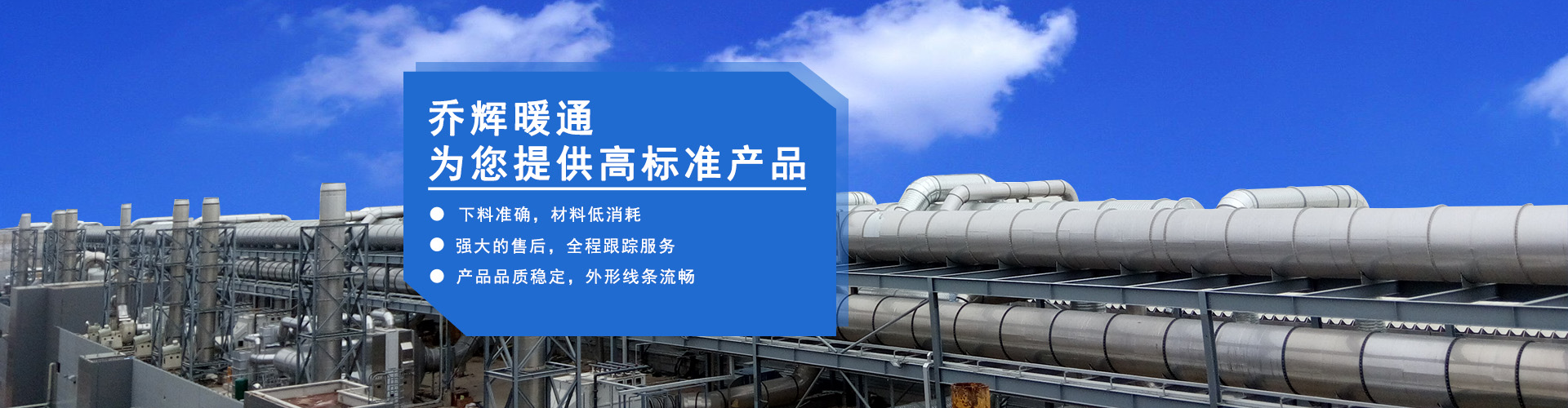

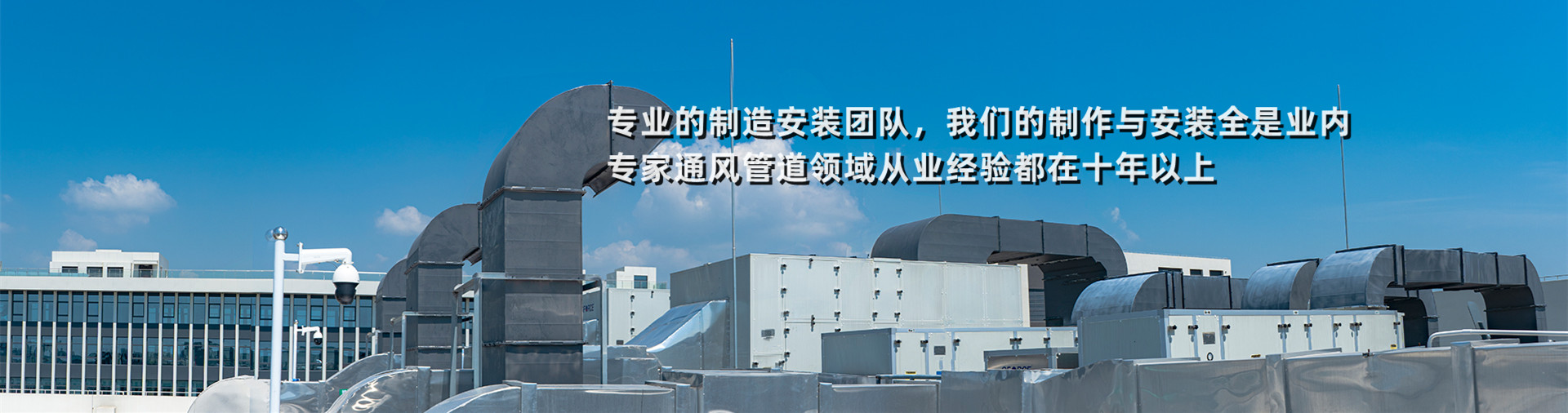
Detailed introduction: The ventilation project of a food production enterprise in Suzhou adopts the construction technology of stainless steel welded ventilation pipeline.
The following is a detailed introduction of the construction technology of stainless steel welded ventilation pipe in the ventilation project of a food production enterprise in Suzhou:
preliminary work for construction
Technical preparation: Be familiar with technical data such as drawings and specifications, prepare and organize joint review of schemes, and determine specific process parameters such as connection mode and reinforcement form of air ducts.
Material preparation: according to the design scheme, determine the required specifications and quantity of stainless steel air ducts and accessories, and ensure the quality of stainless steel plates meets the requirements, such as uniform thickness and no obvious defects on the surface.
Tool preparation: Prepare construction tools such as plasma cutting machine, square folding machine, electric welding machine, argon arc welding machine and fixture, as well as measuring tools such as tape measure and level meter.
Personnel training: train the workers involved in the construction to familiarize them with the construction methods, safety operation procedures and quality standards of stainless steel air ducts.
Construction process steps
Cutting and blanking of steel plate: according to the width of stainless steel coil plate and the specification of air duct. If the circumference of the air duct is 3600mm, the rolled plate with a width of 1210mm can be cut into two plates with a size of 1800 mm× 1210 mm. At the same time, according to the flanging size of 15mm, the flanging required for the transverse welding of the air duct is first folded on the folding machine, and then folded according to the side length of the air duct.
Angle steel blanking and reinforcement frame prefabrication: the specification of angle steel used in the duct reinforcement frame is determined to be < 30× 30× 3, and the stainless steel angle steel is welded after blanking according to the specifications of the duct, so as to manufacture the reinforcement frame.
Longitudinal welding molding of air ducts: the assembled air ducts are fixed with fixtures, and the welding seam is fillet welding. When welding, welding shall be carried out in reverse sections from the middle to both ends to reduce deformation.
Transverse welding of air duct: Flanging butt welding is adopted, and the flanging height is controlled at 15mm. Two sections of molded air ducts are fixed on the fixture table and then welded, and are welded symmetrically in sections from the middle to both sides.
Welding reinforcement frame: move the prefabricated stainless steel angle steel reinforcement frame to the transverse flanging joint of each duct, clamp it with a fixture, and weld the butt joint of the transverse flanging of the duct with the stainless steel reinforcement frame by intermittent welding. The length of intermittent welding seam is 20mm, and the spacing is the same as that of flange screw holes.
Weld treatment
After welding, remove the oil stain, welding slag and spatter on the surface of weld and air duct, then use pickling passivation paste for pickling passivation, rinse with clean water after about 20 minutes, and finally dry the surface of air duct with a clean rag to form a dense oxide film to improve corrosion resistance.
Duct installation
Measurement and marking: according to the design scheme, use measuring tools to measure the construction site, determine the position and size of the air duct, and mark it on the construction site.
Install the connector: connect the connector of the air duct to the air duct, and ensure that the connector is firmly connected and in the correct position.
Hoisting the air duct: hoist the processed air duct to the designated position with cranes and other equipment, install it in the order of main air duct first and then branch air duct, connect the air duct and fix the bracket, and adjust the levelness and verticality of the air duct.
Ensure airtightness: use sealant tape and other materials at the joint of the air duct to ensure the airtightness of the air duct, and conduct air leakage detection after installation.
quality control
Process inspection: During the construction process, process inspection shall be conducted regularly to ensure that the processing and installation of air ducts conform to relevant standards and specifications such as Code for Acceptance of Construction Quality of Ventilation and Air Conditioning Engineering (GB50243-2016) and Technical Specification for Ventilation Pipes (JGJ141-2004).
Construction record: record the construction process in detail, including measurement data, construction site, construction personnel, material usage and other information for quality traceability and construction process analysis.
Pipeline inspection: after the construction is completed, the air duct shall be inspected for tightness, strength and stiffness to ensure its performance meets the requirements.