Welcome to our website!
Hotline: 177-1262-3841
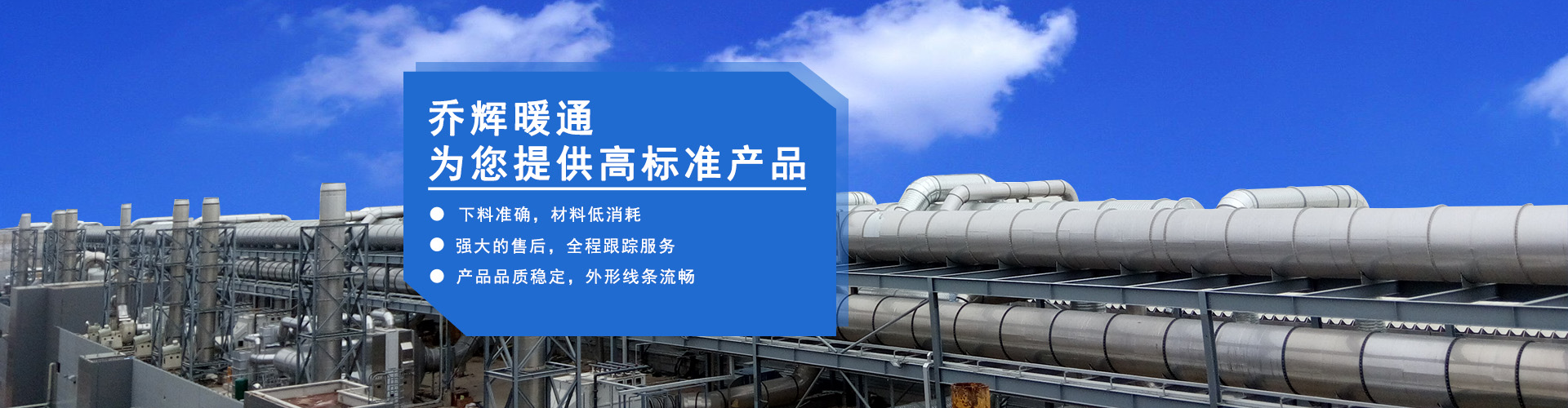

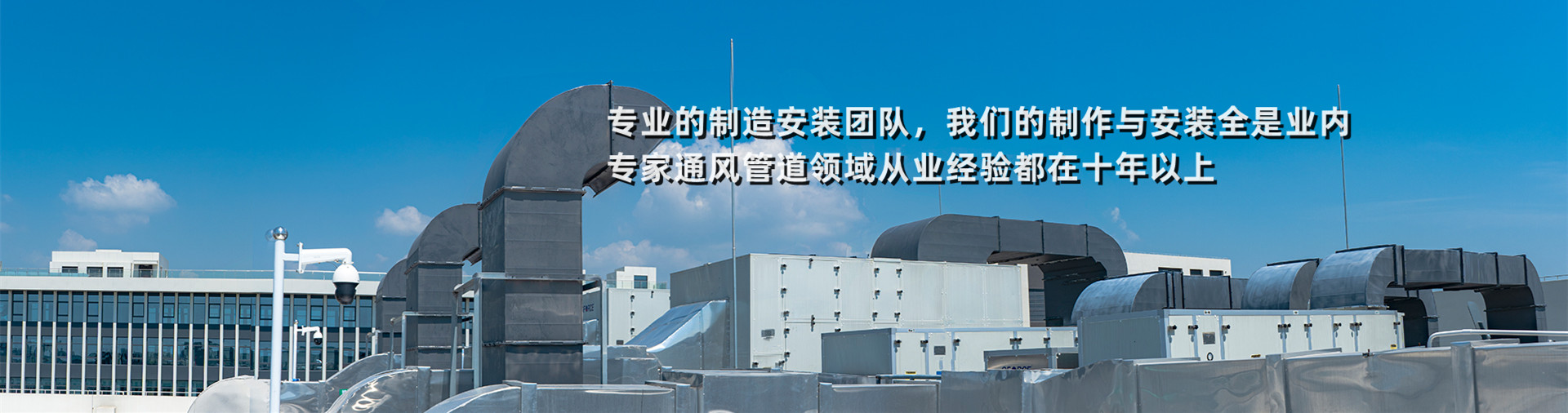
Suzhou Qiaohui HVAC introduces to you: a complete analysis of stainless steel welding ventilation pipeline engineering in paper mill
In the process of papermaking, the processes of pulping, bleaching and coating will produce pollutants such as hydrogen sulfide, chlorine gas, VOCs and paper fiber dust, which are not only highly corrosive, but also have explosion risks and health hazards. As a key environmental protection and safety facility, stainless steel welded ventilation pipes need to take into account multiple requirements such as corrosion resistance, explosion protection and sealing, and their engineering quality directly determines the production safety and environmental protection level of paper mills.
First, the core requirements of the project and material selection
The composition of waste gas in paper mill is complex. Chlorine gas (peak 50ppm) in bleaching process, hydrogen sulfide (50-100ppm) and VOCs (600-800 mg/m) in pulping process are extremely corrosive to pipelines. The annual corrosion rate of traditional carbon steel pipelines is 5%-8%, and the maintenance cost is high. Therefore, the material selection should meet the three core requirements of corrosion resistance, strength and explosion resistance. 304 and 316L stainless steels are commonly used, of which 316L is far more resistant to chloride ion corrosion than 304 because of its molybdenum content, and is suitable for strong corrosion areas such as bleaching workshops and wastewater treatment stations. 304 can be used in the workshop of preparing materials and cutting finished products with high dust concentration. The thickness of the pipeline should be determined according to the pressure and size, usually 0.5-3mm, and the surface should be 2B smooth or sandblasted, the inner wall should be flat and free of oil pollution, and the food-grade area should meet the mirror polishing standard of Ra≤0.4μm m..
Second, the key construction technology and quality control
The welding and installation process of stainless steel ventilation pipe directly affects the system performance. In the welding process, argon arc welding (TIG) is preferred, which is suitable for 0.5-3mm thin plates, and the weld seam is beautiful without splash, while plasma welding is used for thick plates. Deformation and sealing should be strictly controlled in construction: pipeline distortion should be reduced by subsection welding, fixture fixing and anti-deformation technology; Weld shall be penetrant inspected to ensure no air holes and slag inclusion, and the inner wall weld bead shall be polished to avoid dust accumulation. Flange connection adopts stainless steel flange or common plate flange, with flatness error ≤1mm and bolt hole spacing error+/-1 mm. The gasket is made of corrosion-resistant EPDM or silica gel. The installation of supports and hangers follows the spacing standard of "horizontal pipe ≤3m, vertical pipe ≤4m" to avoid weld cracking caused by pipeline vibration.
Dimensional accuracy control is the key point of construction. Diagonal error should be ≤3mm/m, length error should be+/-2 mm, and ovality of circular tube should be ≤3‰. After installation, it is necessary to carry out sealing test: the low-voltage system adopts light leakage detection, and no visible light spot is qualified; The medium and high pressure system needs to be tested for air leakage, and the leakage should be controlled within the specification range of ≤2%. In addition, the cleanliness of the inner wall of the pipeline needs to be wiped by white gloves to ensure that there is no welding slag and oil residue.
Three, explosion-proof and safety design points
Paper fiber dust (lower explosion limit 60-80g/m) and wood powder (40-60g/m) are easy to form dust clouds in the pipeline, so it is necessary to avoid risks through anti-static and explosion-proof design. The pipeline material shall have antistatic performance, and the grounding resistance of all metal parts shall be ≤ 4Ω; The pipeline layout follows the principle of "short, straight and smooth", avoiding 90 sharp bends and excessively long horizontal pipe sections, and controlling the wind speed at 18-22m/s to prevent dust settling and blockage. Adding flameproof valve at the branch of the pipeline can block the flame propagation when it explodes; Explosion-relief discs (explosion pressure ≤0.1MPa) shall be installed at key positions on the roof and pipeline of the workshop, and the explosion-relief direction shall avoid the personnel passage. At the same time, fans, motors and other equipment should be explosion-proof models of ExtDA21IP65T80℃, and cables should be sealed through pipes to prevent ignition sources.
Four, environmental protection and acceptance criteria
The project acceptance shall meet both national standards and industry norms. In terms of environmental protection, the emission concentration of ventilation system should meet the Integrated Emission Standard of Air Pollutants (GB16297-1996), and the emission of VOCs should be reduced from 600-800 mg/m to below the standard limit. The construction quality is based on GB50243-2016 Code for Acceptance of Construction Quality of Ventilation and Air Conditioning Engineering and JGJ/T141-2017 Technical Specification for Ventilation Pipes, focusing on inspection of weld quality, air leakage, anti-static grounding and other indicators. In addition, it is necessary to establish a three-level maintenance system: daily inspection of fan current and pressure difference of filter bag, weekly inspection of dust accumulation in pipeline elbow, annual inspection of third-party airflow organization simulation and filter bag integrity inspection to ensure long-term stable operation of the system.
To sum up, the stainless steel welding ventilation pipeline project in paper mill is a technology-intensive system project, which needs scientific selection, meticulous construction and full-cycle management to achieve the goal of "safety, environmental protection and low consumption" and provide the core guarantee for the sustainable production of paper enterprises.